I Was Supposed to Be in the World Trade Center on the Morning of September 11, 2001
I was supposed to be in the World Trade Center on the morning of September 11, 2001.
That is the sentence everything else hangs from, even though for most of the last twenty-five years I have not walked around thinking about my life that way.
I was supposed to be at a Waters conference that morning. Instead, I overslept.
There are decisions that change your life, and then there are accidents that do it without asking your permission. A missed train. A phone call. A red light. An alarm you sleep through. Tiny ordinary failures that become enormous only because of what happened next.
I overslept.
Twenty-five years later, I am still here.
A few days ago, I opened an old manuscript I had not looked at closely in years. It was an early version of a novel that would eventually become something entirely different, a story I kept changing and carrying around until pieces of it found their way into Monday Is for Murder. Back then it was called Love in Manhattan, and the main character was Evie, a woman who lived in Battery Park City, worked in financial technology, loved New York beyond reason, spent too much money on shoes and was supposed to be at a conference in the World Trade Center on September 11.
So yes. Fiction.
Sort of.
Reading it now is a peculiar experience because I can see exactly where invention stops doing the heavy lifting.
Evie oversleeps. The phone rings. Someone tells her to turn on the television. The second plane hits. People begin calling because they know where she was supposed to be. Someone asks the question that sits underneath all of it: weren’t you supposed to be at the show?
I had forgotten how much I had written down.
Not the things that make it into documentaries.
The other things.
The stupid things.
The human things.
In the manuscript, she is afraid to get into the shower because something else might happen while she is wet and naked. She loses power. AOL Instant Messenger becomes the way she tells people she is alive. Messages arrive faster than she can answer them. Everyone wants to know where she is. Everyone wants her to leave the city, as though leaving Manhattan that morning were something you could simply decide to do.
When they evacuate her building, she thinks she will be able to take a suitcase and her cat.
She gets a handbag.
She leaves food and water for him and walks down twenty flights of stairs in the dark. There are other people moving through the stairwell, but nobody is talking.
That silence got me.
Not because I suddenly remembered every second of it with cinematic clarity. Memory does not work that cleanly, at least mine does not. It was the recognition of something more physical. The way a body behaves when the brain cannot quite process what has happened yet.
Outside, she looks north for the towers because that is what she always does when she leaves her building.
Then she starts walking toward them.
Five steps.
That is in the manuscript. Five steps in the direction she always walked before she realizes there is nowhere familiar to walk to anymore.
I could not have invented that now.
Now I would be too aware of symbolism. I would know what the towers mean in retrospect. I would know what readers have seen thousands of times, the photographs, the smoke, the firefighters, the missing-person posters, the speeches, the anniversaries, the endless sentence that begins with “Where were you when…”
Back then, apparently, I remembered walking the wrong way.
I remembered expensive baby strollers and high heels abandoned at the dock because there was no room for them on the police boats evacuating people across the river. I remembered a young police officer talking about what he had seen until another officer noticed her going white. I remembered standing in New Jersey looking back toward Manhattan and trying to pick out one apartment building in the smoke because the cat was still inside.
I remembered a woman on a bus whose husband worked at the World Trade Center.
Nobody knew where he was.
Nobody wanted to say what that might mean.
And, because apparently this is also who I was in a catastrophe, I remembered going into a Duane Reade and buying contact lens solution, mascara and cigarettes.
Something normal to do.
Something completely insane to do.
Something entirely understandable to me even now.
That may be the strangest thing about reading this twenty-five years later. The large memories have been handled so many times that they have acquired edges. We know where to put them. September 11 has its imagery, its language, its silences, its commemorations. It became history while those of us who were there were still trying to figure out what had happened to Tuesday.
But the small memories escaped that process.
They are still lying around in this old manuscript exactly where I left them.
The cat.
The stairs.
The mascara solution.
The abandoned strollers.
Those heels.
The instinct to walk north.
The inability to understand that a place that had organized your entire sense of direction could simply be gone.
In the days afterward, the manuscript becomes increasingly unfinished, almost a notebook. There are fragments about trying to get back into Battery Park City, military police, debris in the streets, Con Edison cables, smoke you could taste, bruised feet, people waiting for permission to enter their own apartments, and the absolute determination to get back inside because the cat was there and because, at some point, doing one specific thing becomes easier than comprehending everything else.
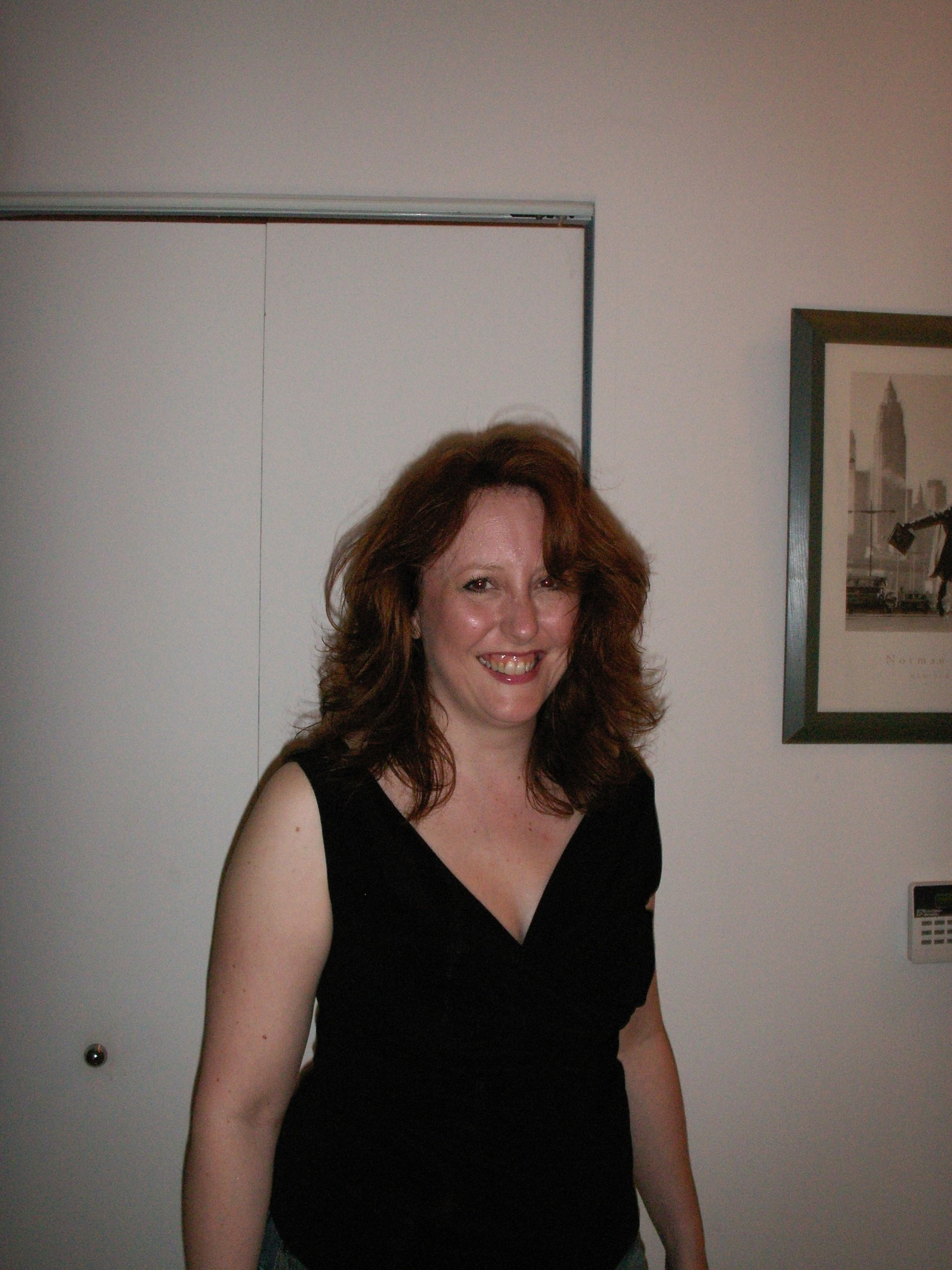 New York, before. | 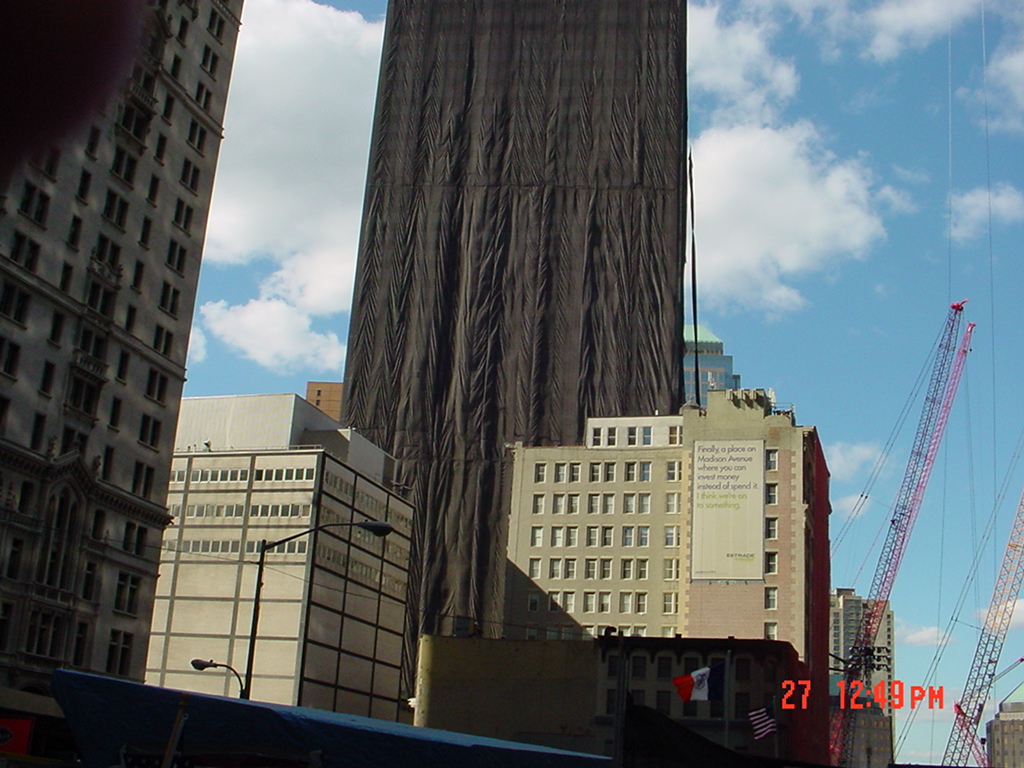 Lower Manhattan in the aftermath of September 11. | 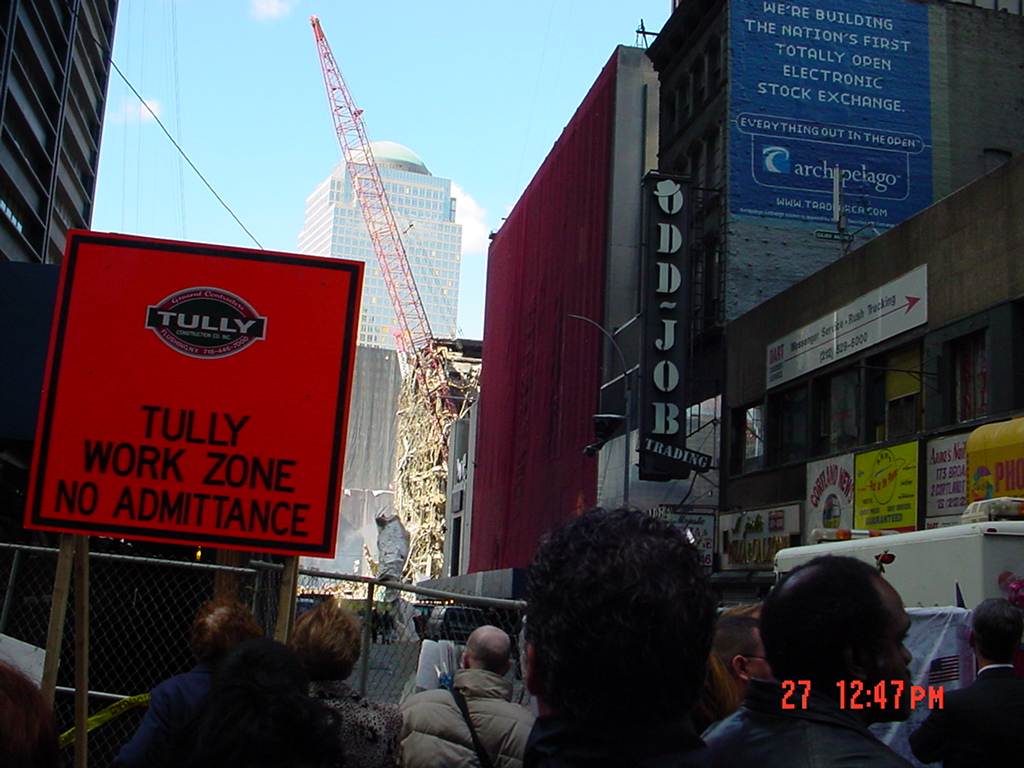 A work zone near Century 21. | 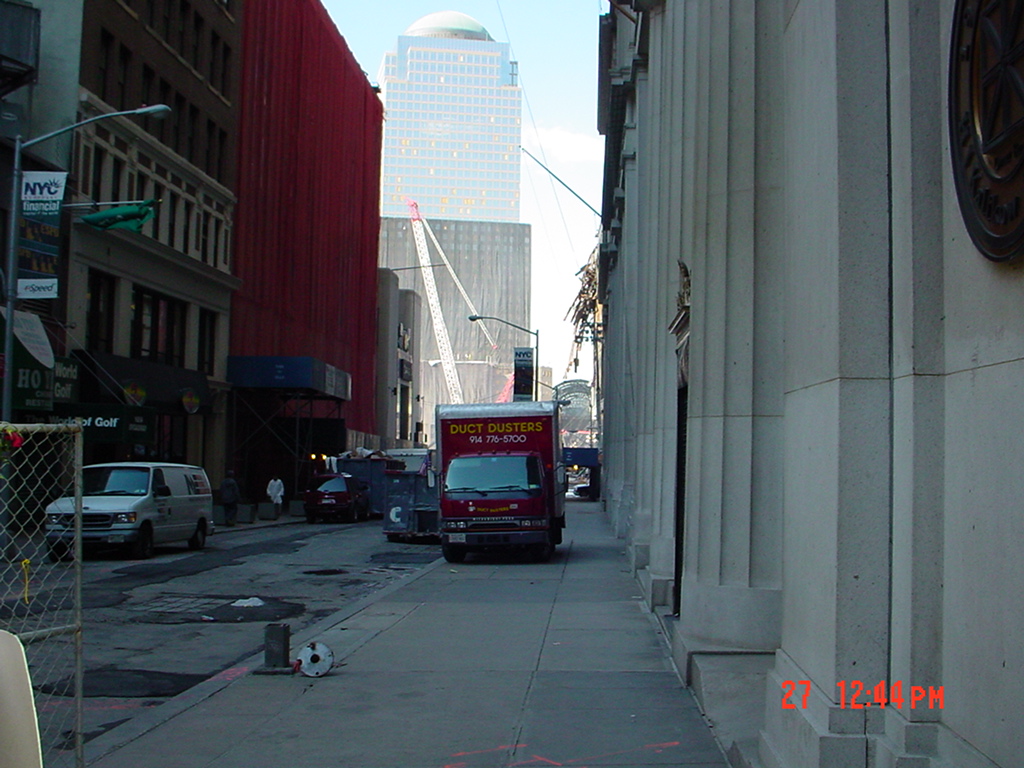 The streets scarred by the cleanup. | 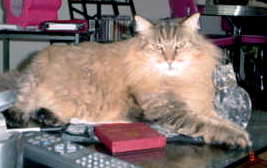 Hobbes. | 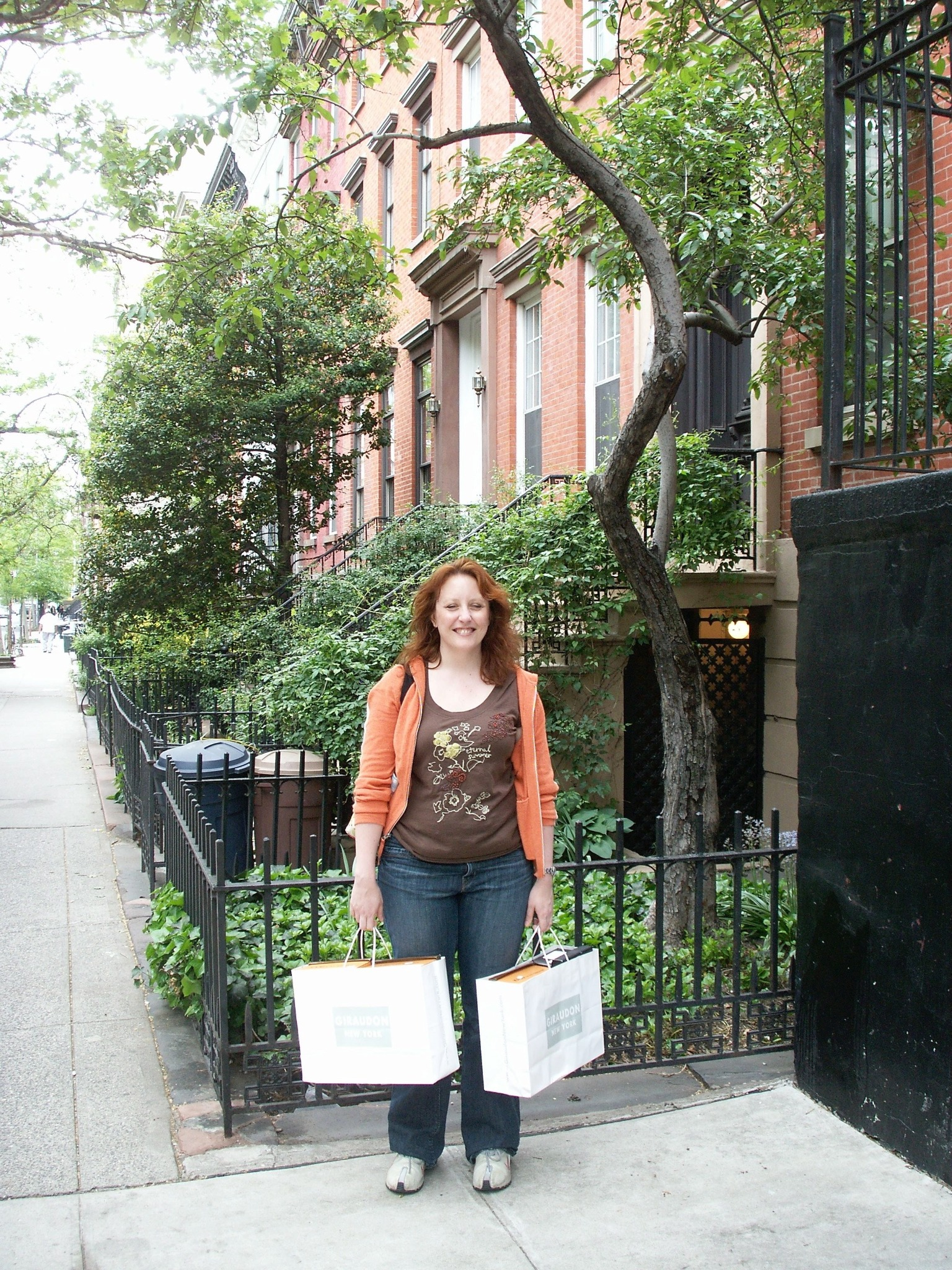 New York, after. |
|---|
Then life begins doing the insulting thing life always does.
It continues.
There is work to do. There are flights to take. Friends have opinions. Relationships remain complicated. People worry about money. People go shopping. People fall in love with the wrong person. People get drunk. People have dinner. The city keeps rebuilding itself around a hole.
The manuscript contains a note for a later chapter: stay downtown.
Deal with the ID checks, the construction, the constant sirens and police, the dust, the streets scarred by the cleanup.
And then this:
“Feel a sense of loyalty to staying downtown.”
There it is again.
Not bravery.
Not resilience.
Loyalty.
That word makes sense to me in a way the others never quite have.
I stayed in New York for another twenty-two years. Eventually I moved back to Denver, where I’m from, but I never left my city. Geography is not always the deciding factor in these things. There are places you live and places that get inside your machinery, and New York has been inside mine for most of my adult life.
This year, on September 11, I will be there.
Not returning.
I never thought of it that way.
I will simply be in my city on the twenty-fifth anniversary of the day I should have been somewhere else inside it.
I do not know exactly what that will feel like, and for once I am not interested in deciding ahead of time what it is supposed to mean.
Maybe that is what twenty-five years gives you.
Not closure. I have never particularly trusted that word.
Perspective, perhaps.
Enough distance to understand that my life did not become more important because I nearly lost it, and it did not become more meaningful because I survived. It simply continued. Messily, improbably, wonderfully, painfully, stupidly, ordinarily.
There are entire people I have loved who I had not met yet.
Work I had not done.
Cities I had not visited.
Stories I had not written.
Friends I had not made.
Cats I had not known.
Shoes I had not bought, which younger me would be relieved to hear.
There are twenty-five years of decisions, disasters, dinners, arguments, flights, mistakes, laughter, grief, ridiculous purchases, work, love and ordinary Tuesday mornings stacked between that morning and this one.
None of them were promised to me.
That is the part I understand differently now.
For years, the remarkable thing about September 11 was what happened.
At twenty-five years, I find myself thinking about what happened after.
I overslept.
And then I got twenty-five more years.
On September 11, I will be in Manhattan.
Still here.