NO WORRIES. OBVIOUSLY WORRIES.
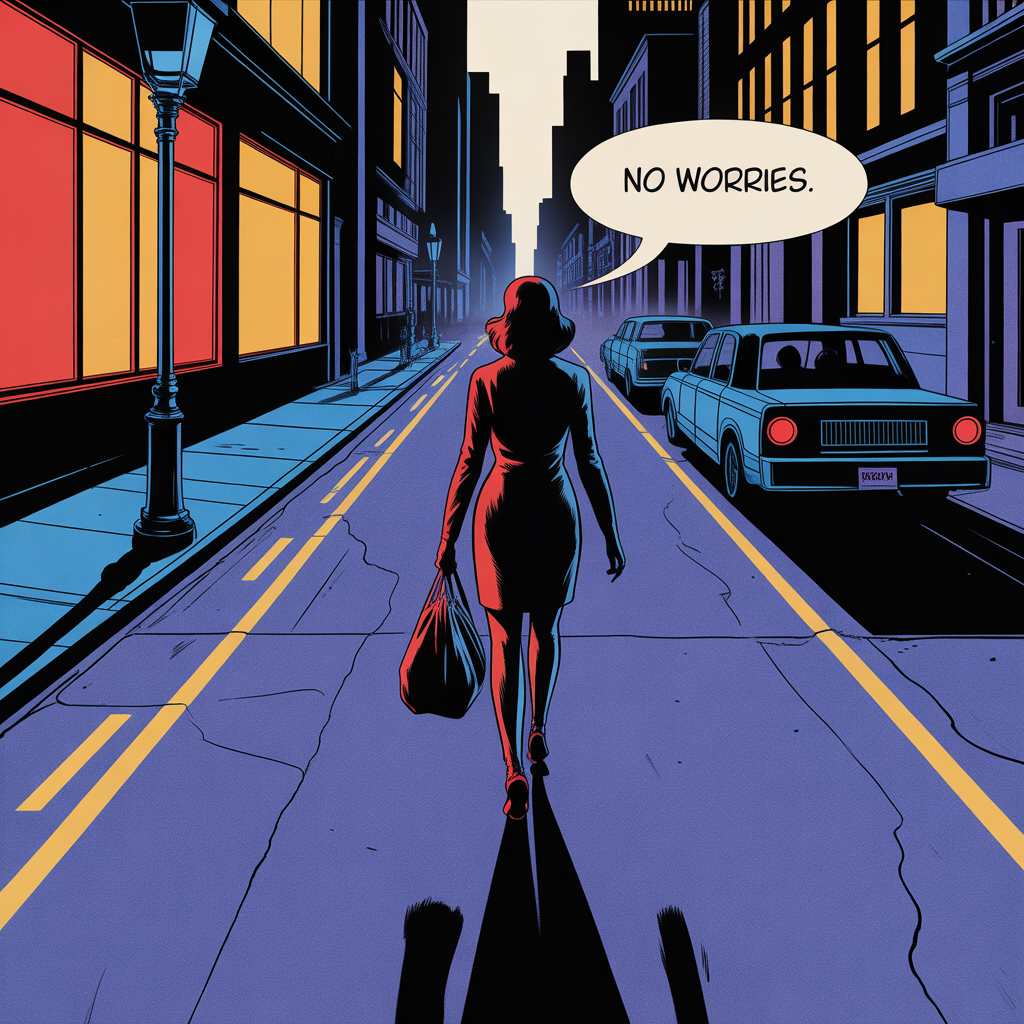
I started keeping track after the third time in one week. Three different people. Three different crises that weren't mine. Three times I said "no worries" and meant I'm now carrying your anxiety so you don't have to.
"No worries" is the most violent phrase in casual conversation. Not because of what it says, but because of what it does. It erases the labor before anyone notices it happened. By the time the words leave my mouth, I've already absorbed the problem, redistributed the risk, adjusted my schedule, my expectations, my emotional bandwidth. I've already made myself smaller so someone else can stay comfortable.
The worst part isn't that I say it. The worst part is that I mean it.
The phrase does different work depending on who says it. When a man says "no worries," he's declining to engage. He's waving off the inconvenience, signaling that it's not worth his energy to care. It's dismissal as power move.
When a woman says it, she's already fixed the problem. She's not dismissing the worry—she's managing it. She's run the scenarios, assessed the damage, recalibrated her expectations, and decided she'll carry the extra weight so no one else has to. "No worries" doesn't mean the worry disappeared. It means she's already holding it.
It's not generosity. It's a trained response. I learned early that my competence was less threatening if I made it look effortless. That my intensity was more tolerable if I wrapped it in reassurance. That people would accept my help if I convinced them it cost me nothing.
So I learned to say "no worries" the way other people breathe. Automatically. Reflexively. A verbal buffer between my capacity and their discomfort with it.
The problem is, it works. People believe me. They take me at my word. They stop worrying because I've taken the job. And I've trained them to expect that my capacity is infinite, that my time is flexible, that my energy resets overnight like some kind of emotional battery that never runs down.
Worrying is labor. I'm just doing it for free. I'm not anxious. I'm doing everyone's risk assessment for them. I'm three steps ahead because someone has to be, and I've learned that if I don't do it, it won't get done—or it'll get done badly, and I'll end up fixing it anyway.
Pattern recognition is both skill and curse. Once you see how things fail, you can't unsee it. Once you've run the scenarios, you can't un-know the outcomes. So you plan around other people's blind spots. You build in extra time for their delays. You prepare for the crisis they haven't noticed yet.
And then you say "no worries" so they don't feel bad about not seeing it coming.
The moment I stopped saying it, people got nervous. Not because anything changed in terms of my actual follow-through. I still did the thing. I still showed up. I still carried the weight.
But I stopped pretending it was effortless. I stopped erasing my labor in real time. I started saying things like "I'll handle it" instead of "no worries." Same outcome, different framing.
"I'll handle it" names the work. It makes the labor visible. It implies cost, even if I'm not charging for it.
Turns out, people don't like that. They preferred the version where I made it look easy. Where my competence didn't ask them to notice it.
"No worries" erases you. "I'll handle it" names your labor. The difference is small. The shift is enormous.
One makes you invisible. The other makes people aware they're asking something of you.
One lets them stay comfortable. The other reminds them that comfort has a cost—and right now, you're paying it.
I still say "no worries" sometimes. But now I notice when I do it. I notice who I say it to, and what I'm protecting them from. I notice when I'm making myself smaller, when I'm managing someone else's discomfort with my capacity, when I'm doing emotional labor I didn't agree to.
And sometimes—not always, but sometimes—I let them worry instead.
Not because I won't help. But because I'm done pretending it costs me nothing.