The Lie Was the Tell, Not the Job
There's a guy in this week's Wired piece — Gary, 23, works at Palantir — who tells women at bars that he took the job to help pay off his parents' medical bills. It's a good story. Sympathetic, specific, hard to argue with.
It's also not true. His parents don't have medical debt. They're not sick. He made it up.
Sit with that, because the internet's version of this story is "tech bros can't get laid anymore, lol, good" — the version that fits in a repost. It's also the least interesting thing happening in the piece. The interesting thing is that a 23-year-old engineer has a pre-loaded fictional excuse on standby for his own employer, and reaches for it before the truth, because he's already run the math on which version gets him further. That's not a man caught off guard by the culture turning on him. That's a man who has fully internalized the read and is now performing around it in real time.
That's the actual story. Not "no one wants to date tech bros." It's: tech bros have gotten extremely good at reading a room they used to be oblivious to — and have moved from being surprised by the leak to managing it.
The tells, as reported, not as I imagined them
Selective disclosure by app. One subject put his employer on his Hinge profile and left it off Raya. Raya worked better. He noticed. That's not an accident — that's a controlled experiment in how much of himself gets him rejected, run by someone who now knows the answer and adjusts the input accordingly.
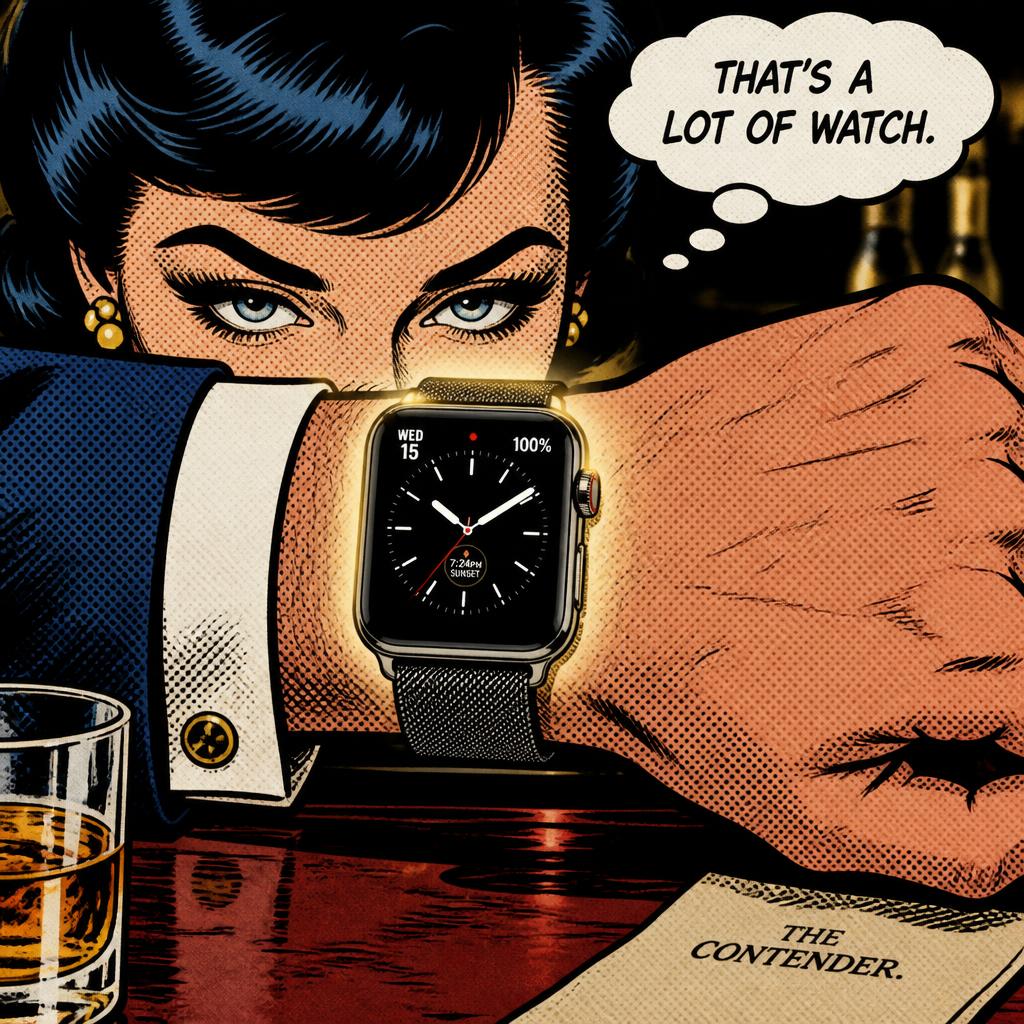
The Apple Watch panic. A therapist's client asked whether the watch in his dating photos would read as "toxic masculinity." Not the job. The watch. The tell has gotten granular enough that a wearable is doing reputational work now — which means the read isn't really about the job at all. It's about aesthetic proximity to a type.
The pre-confession. One subject — self-aware, to his credit — walks women through his own indictment before they can build it themselves: pays too much in rent, DoorDashes everything, isn't "contributing to the culture of the city." He's not hiding the profile. He's narrating it first, so it lands as charm instead of an accusation. That's a specific move — get there before the other person does, and you control the tone.
The matchmaker's running start. A professional matchmaker now opens her pitch for tech-employed clients with "hear me out" before she even says the word tech. That's a woman who's learned, from repetition, that the job title needs a preamble before it can land as a compliment instead of a warning.
The values gap, named out loud. One woman in the piece — former tech herself, now in impact investing — put it more plainly than anyone: it's not that she assumes every guy in AI is a bad person, it's the "cognitive dissonance" of caring about climate and human rights while building for an industry she can't square that with. That's the tell underneath the tell. It's not the résumé line. It's whether the résumé line and the stated values are in the same room together, or just occupying the same person without ever meeting.
The line that isn't really about dating. One woman traced her decision all the way back to her family's history in Tigray, and said she couldn't be with someone who's "a puzzle piece" in the kind of surveillance infrastructure that enables things like that. That one isn't a dating preference dressed up as a moral stance. It's a moral stance that happens to also function as a dating preference — and it's worth not flattening it into the same bucket as the Apple Watch guy. Some of these tells are vanity-adjacent. That one isn't.
None of this is really about politics, even though the piece keeps orbiting Musk and Palantir and Trump as the presenting symptom. It's about legibility catching up to behavior that was always readable, if anyone had been checking. The tech-optimist costume — flip-flops, hoodie, "I'm just building things nobody else is crazy enough to build" — used to buy these guys the benefit of the doubt by default. The costume didn't change. The doubt did. What used to read as ambitious now gets cross-examined for what it's ambitious for.
And the read has gotten fast. One subject says he doesn't even have to bring up Musk — if he doesn't volunteer that he dislikes him fast enough, people just assume he's conservative. The tell isn't a statement anymore. It's the absence of a preemptive disclaimer, clocked in real time, before a single opinion has actually been offered.
The ending is the whole point
The subject who eventually found someone did it because she'd just moved to the Bay Area for med school and hadn't yet learned what "tech bro" was supposed to signal. Not because he'd changed. Because she hadn't caught up yet. His own line about it: "Thank God. I don't think I would have made it if you did."
That's not a happy ending. That's a man who knows exactly how much time he has before the read finds him, dating on the clock, and calling it luck.