You Can’t Save a Place by Missing It
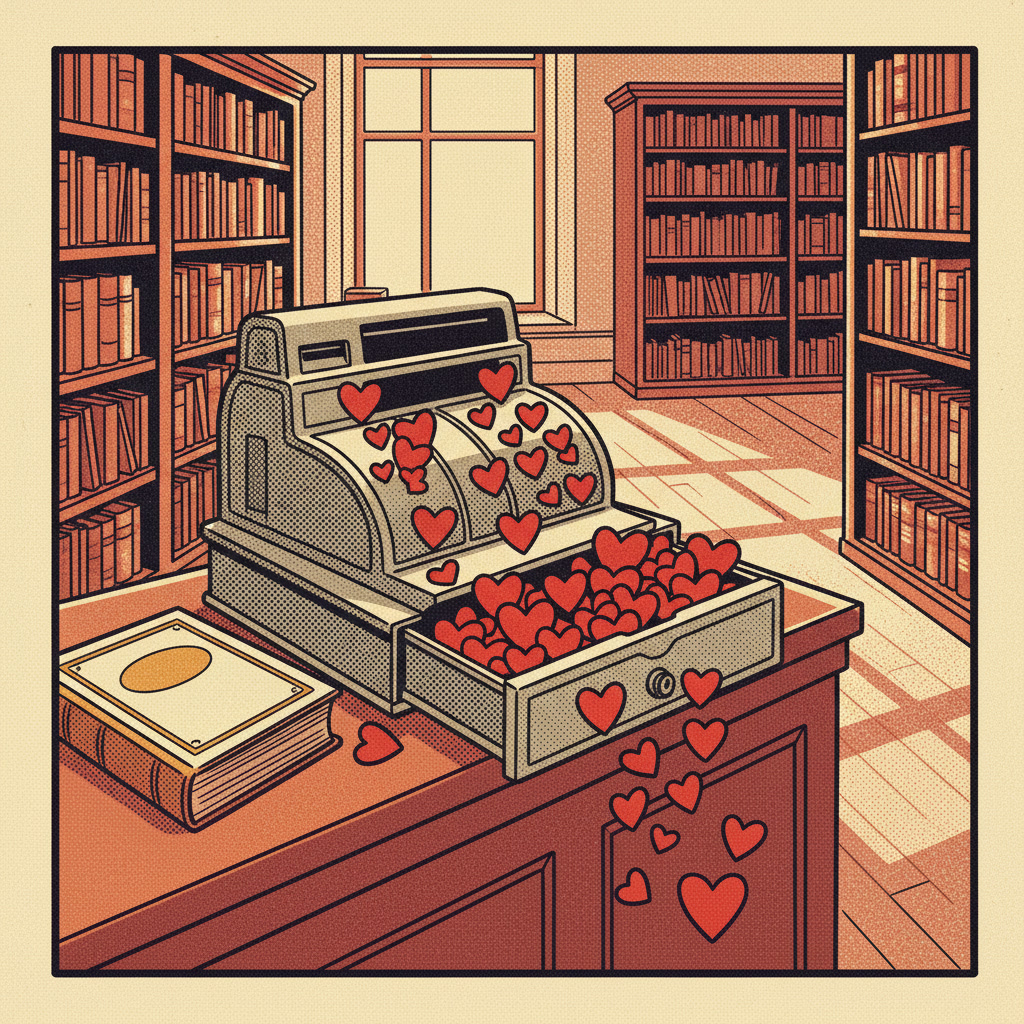
Tattered Cover is still open. Barnes & Noble owns it now.
Depending on whom you ask, the first sentence is either a relief or made considerably worse by the second. Both reactions make sense to me. Denver kept its bookstore. Denver lost its independent bookstore. The sign on the door can’t settle which of those facts matters more.
A recent Denver Gazette column described a book event there that felt much as it always had to the writer. I’m glad it did. I also understand why someone might walk through the same store and feel the ownership change even if they couldn’t point to a single shelf that looked different.
That’s what happens when a place becomes part of a city’s idea of itself. People aren’t only attached to what happens inside it. They’re attached to what its existence says about the city outside.
But the Tattered Cover story has me thinking about the moment before a place changes hands or closes. The long, ordinary stretch when it’s still open and everyone assumes it will remain that way.
We do this with bookstores, bars, restaurants, little shops whose names we give to visitors because they make us sound like we know our own city. We call them institutions. We say we’d hate to lose them. Then months go by without our setting foot inside.
I’m interested in that gap between affection and action, partly because it’s so easy to live in it.
When a place closes, people come forward with stories. They remember the first date at the bar, the book they bought for someone they loved, the owner who remembered their order. None of that affection is fake. What’s strange is how little it may have had to do with the place’s recent life. The memory belongs to us. The rent was due last month.
There’s a reason closing announcements draw such a response. They tell us the thing we assumed would be there whenever we wanted it has stopped waiting. We revisit it immediately, at least in our heads. Maybe we wish we had gone more often. Maybe we meant to. We almost certainly thought there would be time.
That doesn’t mean the customers killed it. A crowded restaurant can still be losing money. A bookstore can have devoted regulars and a lease it can no longer afford. Owners make decisions we don’t see, under pressures we may never know about. “If people loved it, why didn’t they shop there?” can be a lazy explanation for a complicated failure.
It can also be a question some of us would rather dismiss than answer.
We want independent places in our neighborhoods, but we also make ordinary, reasonable choices against using them. The book costs less somewhere else. It’s raining. The other place has parking. We’re tired. We’ll go next week. None of those decisions is a betrayal. Most barely register as decisions at all.
A year of them registers.
I’m not suggesting that everyone should pay more for a book they can barely afford, or spend money at a bar to keep it in business. People have budgets, and a beloved local business cannot reasonably ask to come before the electric bill. Even for people with money to spare, no single customer can be responsible for preserving every place they care about.
Still, I think there’s a quieter assumption many of us make: Someone must be going.
Someone must be buying books there regularly. Someone must be filling the tables on a Tuesday. Someone must be doing the small, repeatable things that keep a place open so it can be there for us on the rare day we want it. We can love a business without ever finding out whether that someone exists.
And then comes the closing announcement. Suddenly the affection that was too vague to make plans around becomes precise. People can name what made the place special. They can explain exactly why the replacement won’t be the same. Sometimes they organize a final visit, and the room is full in a way its owner probably needed six months earlier.
I don’t say that to mock the final visit. Go. Have the last drink. Tell the staff what the place meant to you. But there’s something painful about a business receiving the clearest demonstration of its value only after it can no longer use it.
Tattered Cover had an ending available to it that many places don’t. A buyer with the resources to keep the name and the stores going stepped in. I can see why people are grateful. I can also see why gratitude might stick in the throat. If independence was part of what you loved, being told the place has been saved doesn’t make the loss imaginary.
The easy argument is to pick a side: celebrate the rescue or mourn the sale. The harder part is admitting that a place can be both preserved and changed, and that our opinions about what should have happened were formed at a comfortable distance from the bills.
Maybe there was no path by which Tattered Cover could have remained exactly what people wanted it to be. I don’t know that there was. An independent bookstore needs more than an appreciative city; it needs a business that works. Barnes & Noble didn’t create that problem by arriving at the end of the story.
The question extends well beyond books. Every city has a list of places people swear define it, even as they go somewhere newer or cheaper or closer to home. Some will survive. Some will close despite everyone’s best efforts. Some will remain in a form that leaves people arguing over whether they count.
And when that happens, grief is fair. Anger may be fair, too. But I’m less persuaded by the kind of outrage that starts only when the choice has been taken away. It’s convenient to defend a place once defending it no longer requires going there.
I keep coming back to the word institution. We use it as though it describes a permanent feature of the landscape. Usually it describes people doing the same difficult thing day after day: opening the doors, paying the staff, ordering what they think we’ll want, hoping enough of us come in. Calling a place an institution can make it seem sturdier than it is.
I don’t have a prescription for saving them all. The economics are bigger than any one person’s habits, and nostalgia is a terrible business plan. But perhaps the next time we say a place matters to us, we can let that thought interrupt an ordinary day instead of saving it for an extraordinary loss.
We could go while it’s still open. We could bring someone who hasn’t been. We could buy the book there when it’s within our means. None of it buys a guarantee. It does mean the place was part of our lives in the present tense, while the people keeping it alive could still feel it.
Tattered Cover is still here. Whether it feels like the same place is something Denver will answer over time, one visit at a time. I hope people make those visits. I hope they do the same for the places whose names won’t be attractive to a buyer when the money runs out.
Missing a place proves it mattered to us. It does very little for the place.